
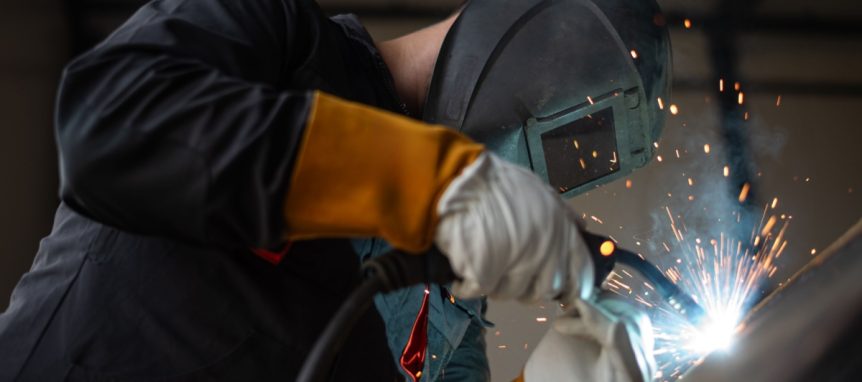
Heavy equipment fabrication demands strength, precision, and durability at every stage of production. From construction and agriculture to transportation and industrial operations, heavy equipment is built to operate under extreme loads, constant vibration, and harsh environmental conditions. At the core of this fabrication process is welding; a critical function that determines how well equipment performs, how long it lasts, and how safely it operates.
Welding is not simply a method of joining metal parts. In heavy equipment fabrication, it is a structural process that directly affects performance, reliability, and longevity. Understanding the role welding plays helps illustrate why experience, technique, and proper fabrication practices are essential in this demanding field.
Structural Integrity Starts with Welding
Heavy equipment relies on welded joints to carry loads, absorb stress, and maintain alignment during operation. Frames, booms, arms, supports, and mounting brackets all depend on strong welds to function as a single, cohesive structure. If welds are weak or inconsistent, even high-quality materials can fail prematurely.
Proper welding ensures that forces are distributed evenly across components rather than concentrated at weak points. This is especially important in equipment that lifts, pushes, pulls, or supports heavy loads on a daily basis. Strong welds help prevent cracking, distortion, and fatigue over time.
Withstanding Constant Stress and Vibration
Unlike static structures, heavy equipment operates in dynamic environments. Engines, hydraulics, and mechanical motion create continuous vibration, while repetitive use introduces cyclical stress. These conditions can quickly expose flaws in poor-quality welds.
Welding in heavy equipment fabrication must account for these stresses by ensuring proper penetration, bead consistency, and joint preparation. Welds that are executed correctly are far better equipped to resist fatigue and maintain their integrity even after thousands of operating hours.
Material Compatibility and Welding Techniques
Heavy equipment fabrication commonly involves carbon steel and other structural metals chosen for strength and toughness. Welding these materials requires selecting the right process, such as MIG, TIG, or stick welding, based on material thickness, joint design, and accessibility.
Experienced fabricators understand how heat input, weld sequence, and technique affect the final product. Improper welding can lead to warping, residual stress, or weakened joints, all of which compromise equipment performance. Skilled welding ensures the material retains its intended properties while forming a reliable bond.
Precision Fit-Up for Large Assemblies
Heavy equipment components are often large and complex, requiring precise alignment during fabrication. Welding plays a key role in maintaining dimensional accuracy throughout assembly. Poor fit-up or uneven welds can cause misalignment, leading to mechanical issues or accelerated wear once the equipment is in service.
Accurate welding ensures that components fit together as designed, allowing bearings, pins, and hydraulic systems to operate smoothly. This precision is critical not only for performance but also for ease of maintenance and repair over the life of the equipment.
Repair, Reinforcement, and Equipment Longevity
Welding is also essential for extending the service life of heavy equipment. Over time, components may experience wear, cracking, or impact damage. Welding allows these parts to be repaired or reinforced rather than replaced entirely, saving time and reducing costs.
In fabrication environments, equipment may also be modified or strengthened to handle increased loads or new applications. Welding enables these upgrades while maintaining structural integrity, helping operators adapt equipment to evolving operational needs.
Safety and Reliability in Demanding Environments
Heavy equipment operates in environments where failure is not an option. A compromised weld can lead to equipment breakdowns, jobsite delays, or serious safety hazards. That’s why welding quality is directly tied to safety in fabrication.
Strong, consistent welds reduce the risk of unexpected failures and help ensure equipment performs as intended under real-world conditions. In industries where equipment reliability impacts productivity and worker safety, welding quality cannot be overlooked.
Built to Perform with Sizemore Welding
At Sizemore Welding, welding plays a central role in everything we fabricate for heavy equipment applications. Our experienced team understands the demands placed on industrial machinery and fabricates components designed to withstand heavy loads, vibration, and long-term use. With in-house cutting, fabrication, and finishing capabilities, we ensure every welded component meets the performance expectations of demanding environments.
If you need fabrication or welding services for heavy equipment projects, contact Sizemore Welding to learn how our expertise can support strength, reliability, and long-term performance.