Metal fabrication involves much more than cutting materials and welding components together. Before many fabricated parts can be assembled, raw metal must be carefully shaped to meet the dimensions and geometry required by the design. Metal forming and bending are essential parts of this process, allowing flat sheets and plates to be transformed into structural components, enclosures, supports, frames, and other complex fabricated products.
Accuracy during forming and bending can influence nearly every stage that follows. Properly formed components are easier to fit, weld, and assemble, while inaccurate bends can create alignment problems and unnecessary rework. For complex and large-scale fabrication projects, the right combination of equipment, planning, and experience helps ensure that each component is produced efficiently and according to project specifications.
Turning Flat Metal Into Functional Components
Metal forming encompasses a variety of processes used to change the shape of metal without removing material. Bending is one of the most common methods, using controlled force to create specific angles and profiles in sheets or plates.
These processes allow fabricators to transform raw materials into components that are ready to become part of a larger assembly. Instead of joining numerous smaller pieces to create a particular shape, forming can sometimes produce the required geometry from a single piece of material. This can simplify fabrication while creating clean and consistent components.
Accuracy Matters During the Bending Process
A bend that is only slightly different from the specified angle can create problems later in production. When multiple components must fit together as part of a larger assembly, small dimensional differences can accumulate and affect alignment.
Accurate bending helps ensure that components match engineering drawings and fit correctly during assembly. Fabricators must account for factors such as material thickness, bend radius, metal type, and the way a material responds to pressure. Metals can behave differently during forming, which makes proper planning and equipment setup an important part of achieving consistent results.
Improving Fit-Up and Welding Efficiency
Forming and bending also have a direct impact on welding. Properly shaped components fit together more accurately, allowing welders to focus on creating strong, consistent joints rather than correcting dimensional problems.
Poor fit-up can create uneven gaps or require components to be repositioned before welding begins. These additional adjustments consume production time and can complicate the fabrication process. Accurate forming reduces these issues and creates a smoother transition from bending to welding and assembly.
On large projects involving many individual pieces, improved fit-up can have a substantial effect on overall production efficiency.
Creating Complex Shapes More Efficiently
Modern fabrication projects frequently require more than simple 90-degree bends. Components may incorporate multiple angles, channels, flanges, and other features that must be formed according to detailed specifications.
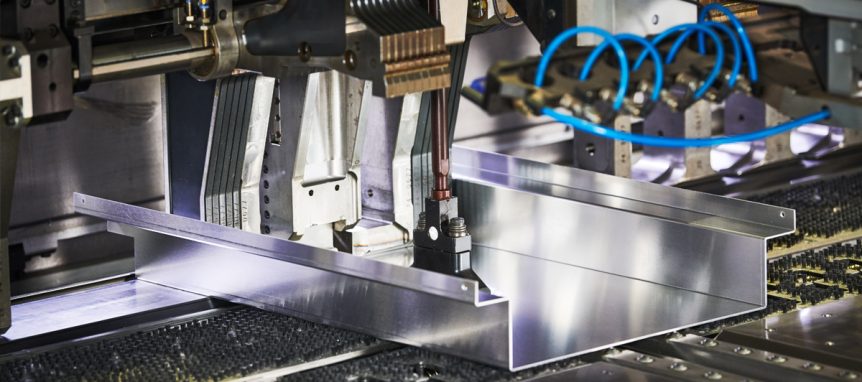
Modern forming equipment gives fabrication shops the ability to produce these shapes with greater consistency. Press brakes and other bending equipment apply controlled force at predetermined locations, making it possible to produce complex components while maintaining dimensional accuracy.
This versatility allows forming and bending to support everything from individual components to large fabricated assemblies.
Reducing Unnecessary Material and Labor
Efficient forming can also help reduce the number of individual pieces needed for an assembly. When a component can be bent into the required configuration from a larger piece of material, there may be fewer separate pieces to position and weld.
Reducing unnecessary fabrication steps can help control labor requirements and shorten production times. Careful planning can also improve material utilization by determining how components should be laid out, cut, and formed before production begins.
These efficiencies become particularly valuable on larger projects where even small improvements to individual components can produce meaningful savings across the entire production run.
Supporting Consistency Across Larger Projects
Large-scale fabrication often requires multiple components with matching dimensions and bend angles. Consistency is essential because variations between parts can create problems during assembly or installation.
Modern forming equipment helps fabricators reproduce bends and profiles more consistently across multiple components. Combined with detailed engineering drawings and careful setup, this repeatability helps ensure that individual parts work together as intended.
Consistent forming also supports more predictable production schedules because teams spend less time correcting components or making adjustments during assembly.
Integrating Forming With Full-Service Fabrication
Metal forming is most effective when it is coordinated with the other stages of fabrication. Engineering, cutting, machining, bending, welding, and finishing all influence the final product, and decisions made during one stage can affect every process that follows.
When these capabilities are coordinated within a full-service fabrication facility, teams can communicate directly and address potential issues before they cause significant delays. Components can move efficiently from cutting into forming and then on to welding, assembly, and finishing. This integrated approach is particularly valuable for complex projects involving numerous components and production stages.
Shaping Successful Projects at Sizemore Welding
At Sizemore Welding, metal forming and bending are part of a broader range of in-house capabilities designed to support demanding fabrication projects. With the equipment, facility, and experience needed to work with large and complex components, Sizemore Welding can coordinate forming with cutting, machining, welding, and finishing to create an efficient fabrication process.
Careful planning and accurate forming help establish the foundation for successful welding, assembly, and final production. If your next project requires professional metal forming, bending, or full-service fabrication, contact Sizemore Welding to discuss your project requirements.